Standing in the baking aisle unsure which box to grab? Baking powder vs baking soda comes down to acid: baking soda needs an acidic ingredient to work, while baking powder carries its own. Check your recipe’s other ingredients first.
If you are just starting out, the wider guide to baking at home for beginners puts these two ingredients in context.
| Item | Value |
|---|---|
| Baking soda is made of | Pure sodium bicarbonate |
| Baking soda strength vs baking powder | About 3-4 times as strong |
| Typical baking soda in a recipe | ¼ teaspoon per 1 cup of flour |
| Swap for 1 tsp baking powder | ¼ tsp baking soda + ½ tsp cream of tartar |
| Swap for 1 tsp baking soda | 3 tsp baking powder |
| Shelf life once opened | 6 to 12 months |
These figures come from Arm & Hammer’s baking soda guide and Jessica Gavin’s food science explainer. Figures can change and vary by brand, so check the source before you rely on them.
What baking soda and baking powder are
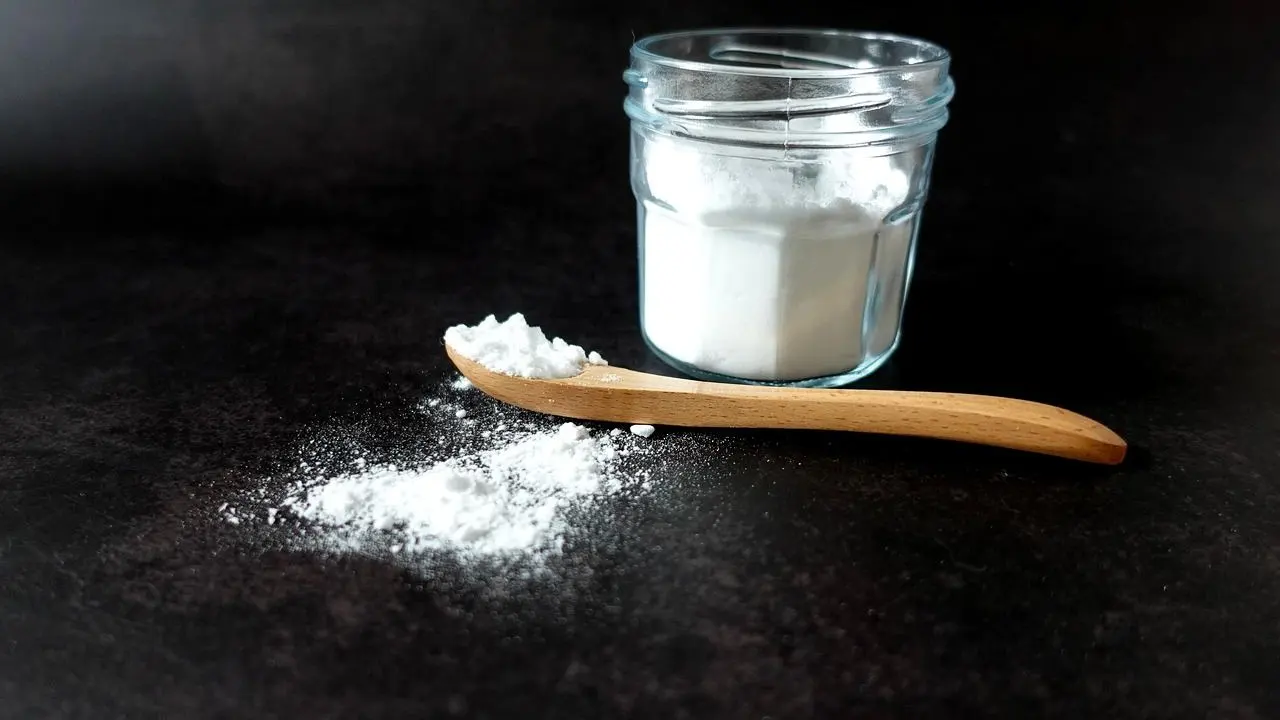
Baking soda is a pure sodium bicarbonate, and bicarbonate of soda is simply another name for the same ingredient, according to Arm & Hammer’s guide. It is a base, so it only works when something acidic is present in the batter.
Baking powder is a blend of baking soda, one or more acid components, and a stabilizer such as cornstarch. Because the acid is already inside, it does not need an acidic ingredient from your recipe to get going. Brands may use different acids, which changes flavor and performance, as the same guide notes.
Both are chemical leaveners, meaning they release gas that expands dough or batter. Yeast, whipped air and steam can lift baked goods too, but baking soda and baking powder are the usual choices for cookies, cakes and quick breads.
Baking soda is woken up by acidic ingredients, and Krusteaz lists these common ones:
- Buttermilk and yogurt
- Brown sugar, honey and molasses
- Lemon juice and vinegar
- Applesauce
- Natural cocoa powder
How each one reacts in the bowl
Baking soda starts making carbon dioxide bubbles as soon as it meets moisture and an acid. Because the reaction happens immediately, you need to get the batter or dough into the oven quickly, before the bubbles escape, as Arm & Hammer explains.
Baking powder comes in two types, and the difference is timing:
- Single-acting powder makes its bubbles on contact with moisture, like baking soda, so the batter needs to be baked fast.
- Double-acting powder has two leavening periods: the first when it meets the liquid, the second when the batter heats in the oven.
Double-acting is the type most shelves carry, and Krusteaz says a recipe that asks for baking powder almost always means it. Even so, bake soon after mixing, because the first reaction has already begun in the bowl, as Bake or Break points out.
When to use baking soda, baking powder, or both
A useful rule is to look at what else is in the recipe. If it has buttermilk, brown sugar, honey or molasses, the acid is there and baking soda can use it. If the batter is mild, baking powder brings its own.
Arm & Hammer’s chart lists cookies and muffins as best for baking soda, and cakes, pancakes and biscuits as best for baking powder. Pancake batter usually isn’t acidic enough to activate baking soda, which is why baking powder suits it, Krusteaz explains. Irish soda bread flips the pattern, getting its rise from buttermilk and baking soda without any yeast.
Plenty of recipes use both. Baking soda reacts with the acid to create an initial lift, while baking powder adds leavening of its own, often a second rise during baking, per Arm & Hammer. Bake or Break adds that baking soda also helps browning and lets cookies spread.
The amounts are small, so measure with care. Recipes typically call for ¼ teaspoon of baking soda per 1 cup of flour, according to Arm & Hammer. A set of measuring spoons belongs on any list of essential baking tools for beginners, and the same attention to accuracy applies when you learn how to measure flour.
Can you substitute one for the other?
Sometimes, but not in equal amounts. Baking soda is a much more powerful leavener than baking powder, about 3-4 times as strong, according to Arm & Hammer. A swap in equal amounts alters the taste and leaves baked goods quite flat.
The same guide’s conversion chart gives these swaps:
- For 1 tsp baking powder, use ¼ tsp baking soda plus ½ tsp cream of tartar. This is the best direct substitute.
- For 1 tsp baking powder, use ¼ tsp baking soda plus 1 tsp lemon juice or vinegar. It may slightly alter the taste.
- For 1 tsp baking soda, use 3 tsp baking powder. No extra acid is needed.
Because brands use different acids, any swap is approximate. When a recipe depends on one ingredient, follow it as written.
What happens when you use the wrong one
Using baking soda instead of baking powder may leave the recipe without a proper rise unless an acidic ingredient is present. It can also leave a bitter or soapy taste, says Arm & Hammer.
Using baking powder instead of baking soda will likely still rise, but not as much. The result tends to be denser, with a possibly off or metallic flavor.
Too much of either causes trouble as well. Jessica Gavin warns that excess can alter the taste or leave the baked good badly misshapen.
Keeping both fresh
Store both covered and sealed in a cool, dry place. Once opened, they are good for 6 to 12 months, according to Jessica Gavin.
To test whether yours still has bubble power:
- Add ¼ teaspoon baking powder to ½ cup hot water.
- If you are testing baking soda, add ¼ teaspoon vinegar to the water as well.
- Watch for an immediate fizz. If you see one, the leavener is good to go.
No fizz means the leavener has lost its strength, so it is time to buy a fresh box before your next bake.
Frequently asked questions
Is baking soda the same as bicarbonate of soda?
Show answer
Yes. Bicarbonate of soda and sodium bicarbonate are other names for baking soda, so the labels refer to the same ingredient.
Can I use baking powder instead of baking soda?
Show answer
You can, with a conversion, but results are less predictable. Baking powder will likely still rise, though not as much, so check the swap section above and follow the recipe where you can.
Why do some recipes use both?
Show answer
Baking soda neutralizes acid and gives an initial lift, while baking powder adds extra leavening. Using both also lets a recipe keep a tangy flavor and good browning without relying on baking soda alone.
What does double-acting mean?
Show answer
Double-acting baking powder has two leavening periods. It reacts first when mixed with liquid and again when heated in the oven, which gives you a little more time between mixing and baking.