Afraid your crust will bake up tough instead of flaky? Here is how to make pie crust that shatters: keep the butter cold, leave it in larger pieces, and chill between steps.
If you want something delicious to put inside it, browse these easy cake and dessert recipes for ideas.
| Item | Value |
|---|---|
| All-purpose flour | 2 cups (260 grams) |
| Cold, unsalted butter | 1 cup (230 grams) |
| Very cold water | 1/2 cup (120 grams) |
| Butter cube size | 1/2-inch |
| Chill time | 1 to 2 hours |
| Usual rolled size for a standard pie crust | 14-inch round |
These quantities and times come from Smitten Kitchen’s extra-flaky pie crust recipe, dated March 14, 2019. Figures can change, so check the source before you rely on them.
What goes into an all-butter pie crust
The recipe in Smitten Kitchen’s extra-flaky pie crust post makes enough dough for one standard double-crust pie or two single-crust pies. It lists these ingredients, and the ratio matters more than any fancy extra.
- 2 cups (260 grams) all-purpose flour
- 1 tablespoon (15 grams) granulated sugar
- 3/4 teaspoon fine sea or table salt
- 1 cup (230 grams, 8 ounces, or 16 tablespoons) cold, unsalted butter
- 1/2 cup (120 grams) very cold water
According to the Smitten Kitchen post, its author’s usual recipe contains the same ingredient ratios as 99% of American-style pie crust recipes out there. The few that do things differently use less flour.
Less flour means a lighter, flakier crust, because less flour means less weight and less density. The trade-off is a dough that softens faster, so you will need more flour on the counter to keep it loose when rolling.
The author of that recipe is still loyal to all-butter crusts, and you can see why: butter gives flavor and, used well, plenty of flake. Pastry chefs quoted by other sources agree that the fat you choose matters less than your handling. As one food site put it, pie crust recipes are all about technique, whether you use all butter, butter and shortening, sour cream or even vodka, as Chowhound reported on Dec. 19, 2024.
Mix the dough and keep the butter cold
The single biggest rule is temperature. Saura Kline, the pastry chef at Local Jones, told Chowhound that the biggest rule with butter and pie dough is to keep the butter cold, because a warm dough bakes up more like a cracker than a flaky shell.
Warm butter leaks out of the dough and evaporates quickly in the oven, which leaves you without crisp layers. Butter also warms faster than you would expect once you start moving it around, so work quickly.
- Whisk the flour, sugar and salt together in a large bowl.
- Cut the cold butter into small cubes, with 1/2-inch being ideal, and toss them in the flour so they are coated.
- Use your fingers to squash each cube into a flatter, lima bean-like piece. It is fine if the pieces are bigger than you are used to.
- Pour the water over the mixture and use a flexible silicone spatula or scraper to bring it together.
- Divide the dough into two parts and wrap each half into a flat packet in plastic, waxed paper or parchment.
- Chill the packets in the fridge until firm, which takes one to two hours.
Notice the target for the butter: you want flat-ish, lima bean-sized pieces, not the usual coarse meal or small peas. Those larger flakes of butter are what melt into layers in the oven.
The dough will seem too wet and sticky, but it will be just fine. The recipe’s author finds that the extra moisture makes what would otherwise be a very firm dough easier to roll.
Choosing your mixing method
You do not need special gear, but different tools give slightly different results. Here is how the sources compare the main options.
- Bench knife: Claire Saffitz, in a King Arthur Baking post dated November 9, 2022, uses one instead of her hands to bring the dough together.
- Fingers: the Smitten Kitchen method squashes each cube flat, though its author still keeps a pastry blender around.
- Food processor: Kline likes it best, while the Smitten Kitchen recipe advises going very easy on it.
The bench knife idea is worth a closer look. In the King Arthur Baking post, the explanation is that a bench knife prevents the butter from warming from the heat of your hands and also very evenly distributes the water.
That even hydration matters because thoroughly hydrated dough has fewer dry spots, which leads to less cracking while rolling. The same post says the butter ends up in pieces of different sizes: tender from smaller pieces of butter, flaky from the larger.
If you reach for a food processor, Kline’s trick is to pre-cut or shred the butter and freeze it before using. The Smitten Kitchen recipe adds that when you are done, you should dump the butter-flour mixture into a large bowl before continuing, and keep the pieces flat-ish rather than fine.
Chill, roll and fold the dough
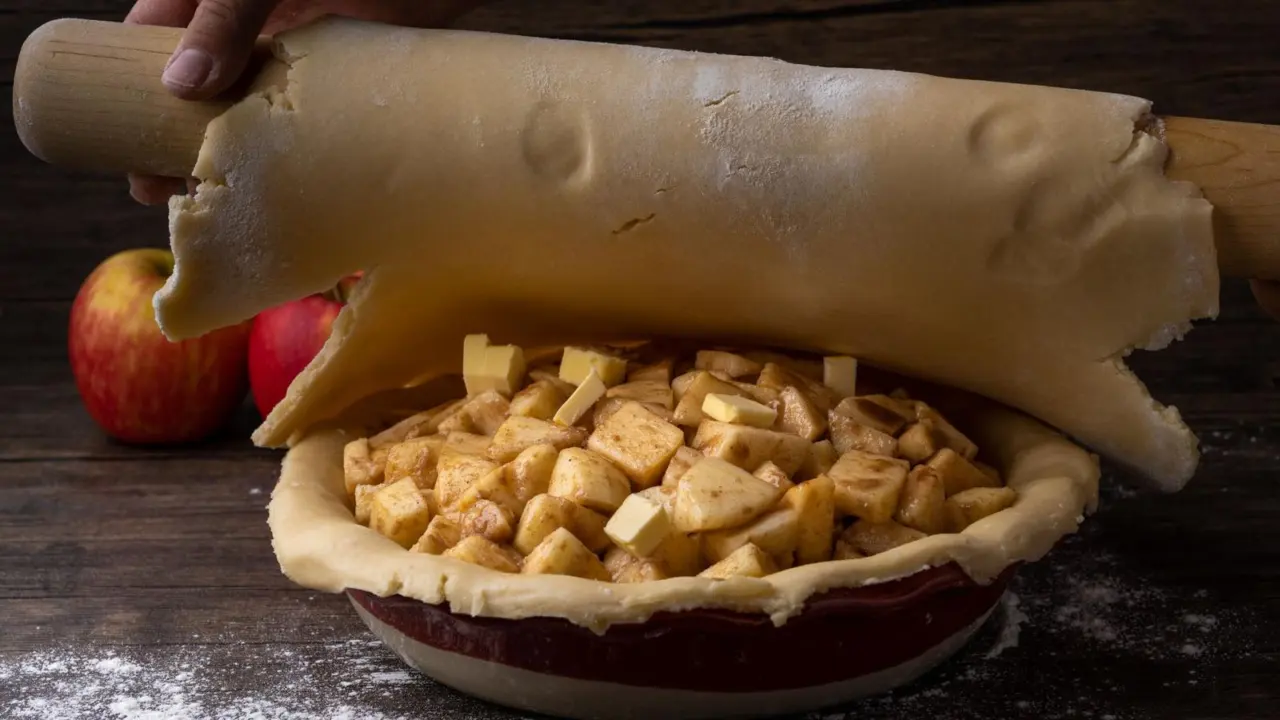
Once the packets are firm, unwrap the first one and place it on a well-floured counter. Sprinkle the top generously with flour and roll it into a thick-ish, long rectangle.
Brush the excess flour off with your hands, then fold the dough as you would a business letter, into thirds. Keep rolling the packet into the shape your pie needs, since a 14-inch round is the usual size for a standard pie crust.
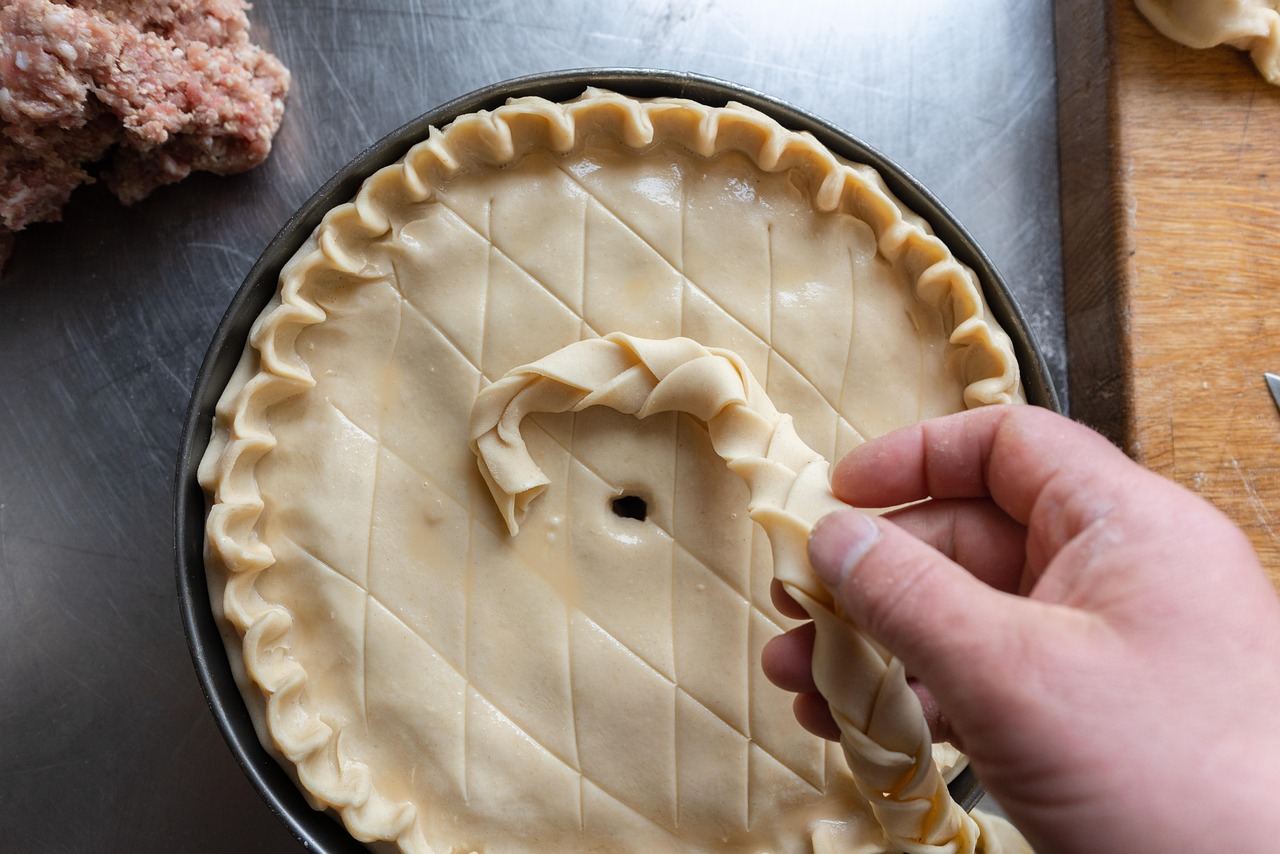
That little bit of folding is not just for show. Smitten Kitchen notes that a little folding improves structure and increases the expansion of flaky layers.
The same recipe says it took 5 minutes to assemble and 5 minutes to roll out, with 15 minutes of prep before the chill. After that, chill the crust again: Kline recommends chilling once the dough is made and again once it has been rolled out into a pie dish.
From here, follow the instructions for the specific pie you are making. If you are planning a custard-style filling, it helps to read up on how to make custard first.
What if your crust cracks, turns tough or bakes up like a cracker?
Most pie crust problems trace back to butter temperature, hydration or flour. Use this quick list to find your fix.
- Cracking while rolling: the dough was probably not hydrated evenly. A bench knife helps spread the water, which leaves fewer dry spots.
- Cracker-like texture: the butter was likely too warm. Chill the dough again whenever it softens.
- Tough or not flaky enough: the standard formula can run a little tough, and using less flour is the fix the Smitten Kitchen recipe offers.
- Sticky dough: flour the counter more and keep the dough cold, since this lighter-on-flour dough softens a little faster.
Do not panic if the dough looks too wet when it first comes together. Damp is part of this method, and the chill time firms it up.
If you would rather skip the rolling pin today, a guide on how to make fudgy brownies is a simple no-roll bake.
Frequently asked questions
Can I use a food processor to make pie crust?
Show answer
Yes, with care. Kline says she likes a food processor best, and the Smitten Kitchen recipe says to go very easy on it so the butter stays in flat-ish pieces rather than coarse meal.
How long should pie dough chill?
Show answer
The recipe says to chill the wrapped packets in the fridge until firm, which takes one to two hours. Kline also suggests chilling again once the dough is rolled into the pie dish.
Why does my dough look too wet?
Show answer
This method deliberately uses a damp dough that seems too wet and sticky but turns out fine. The extra moisture makes an otherwise very firm, butter-heavy dough easier to roll.
Do I have to use all butter?
Show answer
No. Chowhound lists all-butter, butter and shortening, sour cream in place of water, and even vodka as approaches that can work, because technique matters most. The Smitten Kitchen recipe uses all butter.
How big should I roll the dough?
Show answer
A 14-inch round is the usual size for a standard pie crust, according to the Smitten Kitchen recipe. Check your own pie dish and follow the instructions for the pie you are making.