Want to know how to make vanilla cake from scratch without a dense, dry result? Cream soft butter and sugar well, add eggs gradually, mix the flour in gently, and bake at 350°F.
This guide sits within the wider set ofeasy cake and dessert recipes.
| Item | Value |
|---|---|
| Oven temperature | 350°F |
| Butter temperature for creaming | 65°F (18°C) to 68°F (20°C) |
| Flour in the reference recipe | 2¾ cups all-purpose |
| Pans in the reference recipe | Three 6-inch rounds or two 7-inch rounds |
| Cooling in the pan | About 10 minutes |
The figures come from a published creaming-method vanilla cake recipe and a guide to room temperature butter. Ovens and pans vary, so check the sources and your own oven before you rely on them.
What makes a from-scratch vanilla cake work
A vanilla cake has nothing to hide behind. There is no chocolate or spice to cover a mistake, so the texture is the whole story: soft, even and moist, with a clear vanilla flavour.
Most reliable recipes use the creaming method. You beat softened butter with sugar until it is pale and light, then add eggs, then fold in the dry ingredients with milk. The reference recipe uses exactly this approach, with all-purpose flour, granulated sugar, whole eggs and real vanilla extract.
The method matters more than any fancy ingredient. Once you understand why each step is there, you can fix a cake that went wrong and adjust the recipe with confidence.
Get the ingredients ready first
Before you touch a bowl, set everything out so that it can come to room temperature. One baking guide explains that room temperature ingredients “will incorporate much better into your batter than cold or even cool ingredients will.”
Butter is the one to get right. A baker who tests it with a thermometer calls anywhere between 65°F (18°C) and 68°F (20°C) appropriate to use. You can also press it with a finger, which should leave an indent without the butter slipping or sliding around.
Here is what you will need for a standard layer cake:
- Softened unsalted butter and granulated sugar
- Eggs, at room temperature
- All-purpose flour, baking powder and salt
- Whole milk
- Pure vanilla extract
- Round cake pans, parchment paper and a wire rack
Check your own recipe for exact weights. The reference recipe uses 2¾ cups of all-purpose flour, and says you can swap in 3 cups plus 1½ tablespoons of cake flour if you prefer a finer crumb.
Why creaming matters
Many cake, cupcake and cookie recipes that call for room temperature butter and sugar will have you creaming those two together, so the skill carries over well beyond this one cake.
Creaming is not just mixing. Butter is a fat, and as a fat it can trap air while you beat it with sugar. That trapped air expands during baking and creates pockets that give you a fluffy cake.
A baking newsletter describes how the sugar crystals “dig out little air pockets in the butter.” If the butter is too cold, the same source says the crystals cannot claw their way through it, and the result is no trapped air and no light, airy baked good.
The same logic explains why cold eggs cause trouble. If an ingredient is significantly colder than the butter, the butter solidifies again, which leads to clumping and deflated air.
Step-by-step method
- Heat the oven and prepare the pans. Preheat to 350°F. Grease the pans and line the bottoms with parchment rounds.
- Whisk the dry ingredients. Combine flour, baking powder and salt in a separate bowl so the leavening is evenly spread.
- Cream the butter and sugar. Beat until the mixture looks pale and fluffy, and scrape down the bowl once or twice.
- Add the eggs gradually. Add them one at a time, mixing well after each addition. Then beat in the vanilla.
- Alternate dry and wet. Add the flour mixture and the milk in turns, starting and ending with flour. Stop mixing as soon as you cannot see dry streaks.
- Divide and bake. Share the batter evenly between the pans and smooth the tops.
Overmixing after the flour goes in is the most common way to turn a tender cake tough. Keep the mixer on low and stop early; you can finish folding by hand with a spatula.
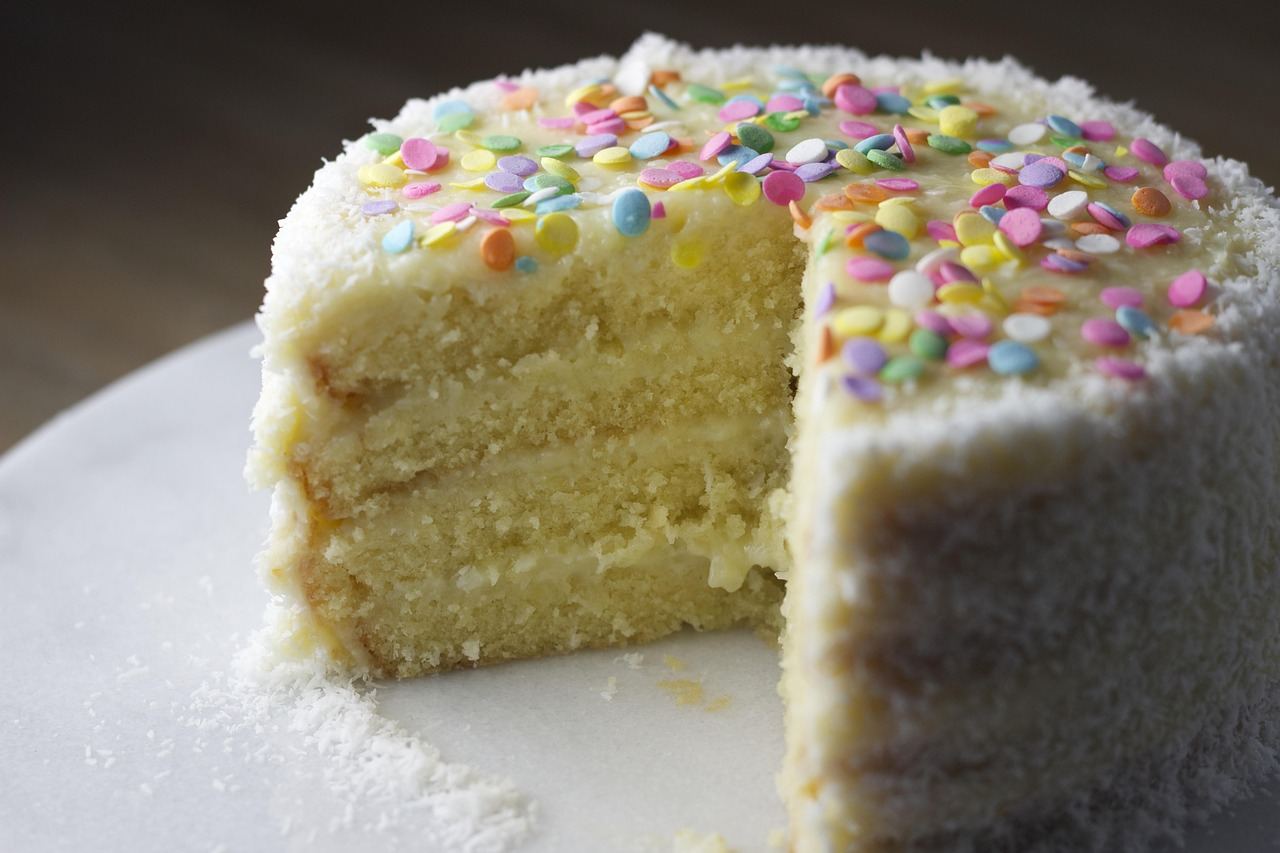
Baking, testing and cooling
The reference recipe bakes at 350°F for about 25-30 minutes in its thinner layers and advises you to start checking at 22 minutes, since thinner layers bake faster. Its pan note says a taller cake comes from three 6-inch pans, while two 7-inch pans give slightly thinner layers.
Do not trust the clock alone. The recipe says the cake is done when a toothpick in the centre comes out clean or with just a few moist crumbs. A tester with wet batter on it means the cake needs longer.
Keep the oven door shut for the first part of the bake. If a cake collapses anyway, read why does my cake sink in the middle to find the likely cause.
Avoid opening the oven until the edges have set; one quick, gentle check near the end is enough. Every oven runs a little differently, so note the time that works for your pans and use it next time.
When the layers come out, let them cool in the pans for about 10 minutes, then turn them out onto a wire rack to cool completely. Cooling fully matters, because frosting a warm layer melts the buttercream and makes the cake slide.
Variations and finishing
You can change the cake without changing the method. The reference recipe uses egg whites for a white cake, and notes that three whole eggs can replace five egg whites for a yellow cake with similar flavour and texture. It still says the egg whites make a fluffier cake.
Once the layers are cold, you can trim the domes, fill and stack them. A separate guide on how to level and layer a cake covers that part in detail.
A simple buttercream made from softened butter, powdered sugar, vanilla and heavy whipping cream suits a vanilla cake well. Keep the frosting plain if the cake is the star.
Common problems and quick fixes
Most failed vanilla cakes trace back to temperature, timing or over-handling rather than a bad recipe. Work through the list below before you change the ingredients.
- Dense cake: The butter was probably too cold or too warm, or the batter was overmixed after the flour went in.
- Curdled-looking batter: The eggs were likely too cold. Warm eggs in a bowl of very warm water for about 10 minutes next time.
- Dry cake: Check for doneness earlier, and take the cake out when a few moist crumbs cling to the tester.
- Domed, cracked tops: The oven may run hot, so check it with a separate oven thermometer.
Frequently asked questions
Do I need cake flour to make vanilla cake from scratch?
Show answer
No. The reference recipe uses all-purpose flour. It gives a swap of 3 cups plus 1½ tablespoons of cake flour in place of the 2¾ cups all-purpose flour if you want a finer crumb.
How soft should the butter be?
Show answer
Aim for a cool, pliable butter that holds a finger indent without slipping. One baker uses 65°F (18°C) to 68°F (20°C) as the working range.
How can I warm eggs quickly?
Show answer
Put them in a cup or bowl of very warm water for about 10 minutes, as one baking guide suggests.
How long should the cake cool before I frost it?
Show answer
Leave the layers in the pans for about 10 minutes, then turn them onto a wire rack. Let them cool completely before frosting.