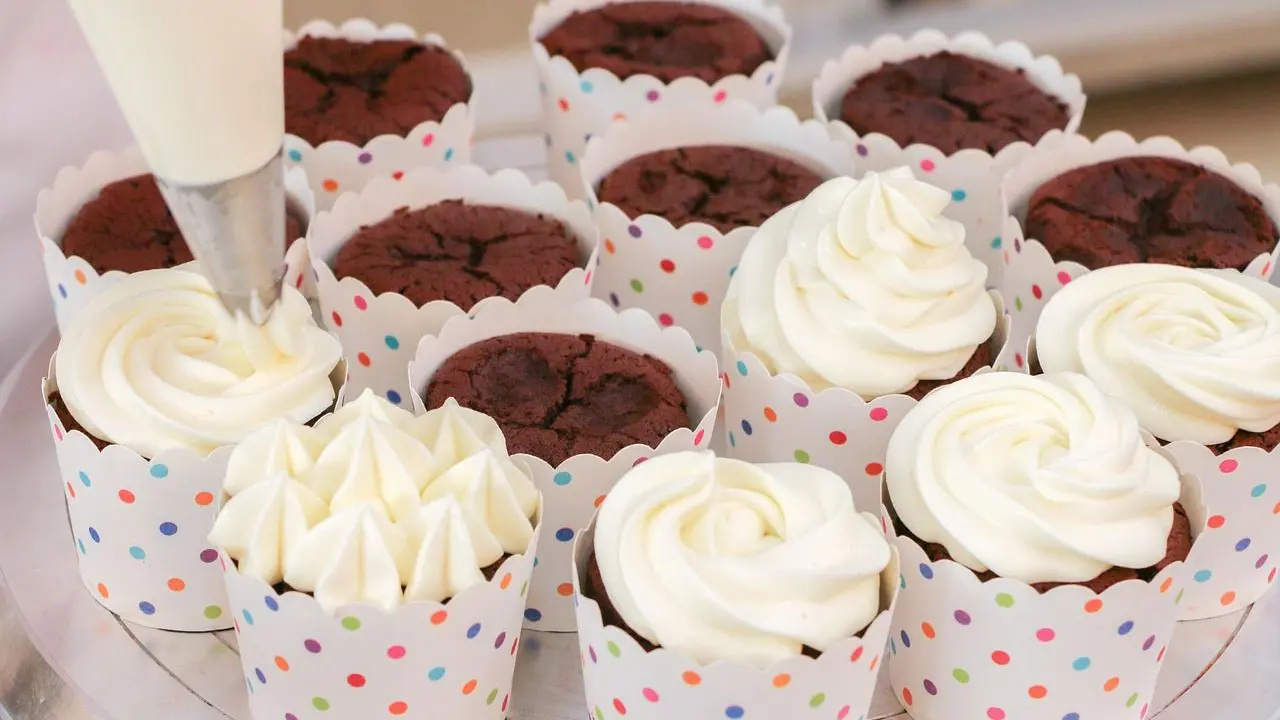
Worried your frosting will turn out too sweet or too runny? This buttercream frosting recipe is just butter, powdered sugar, vanilla and a little milk, whipped until fluffy. You can make it in 10 minutes.
Once your frosting is ready, you can put it to work on any of these easy cake and dessert recipes.
| Item | Value |
|---|---|
| Unsalted butter, softened | ½ cup (113g) |
| Powdered sugar | 1 cup (140g) |
| Whole milk | 1 tbsp (16g) |
| Whipping time | 4-5 minutes on medium high |
| Total time | 10 minutes |
| Yield | 1 1/4 cups, enough for 8-10 cupcakes or a single layer of cake |
These figures come from Curly Girl Kitchen’s buttercream recipe. Recipes can be revised, so check the source before you rely on them.
The basic buttercream frosting recipe
This is a classic American buttercream, based on the formula in Curly Girl Kitchen’s recipe, which is developed for high altitude at 5,280 feet. It is a small batch that takes 10 minutes from start to finish.
Gather these ingredients:
- ½ cup (113g) unsalted butter, softened to room temperature
- 1 cup (140g) powdered sugar
- 1 tsp (3g) meringue powder (optional, but it adds stability)
- ½ tsp (2g) vanilla extract
- 1 tbsp (16g) whole milk
- A pinch of salt
Then follow these steps with a stand mixer and paddle attachment:
- Beat the softened butter for 1 minute.
- Mix the powdered sugar with the meringue powder and salt. With the mixer on low, add this to the butter by spoonfuls. It will look clumpy at this point.
- Add the vanilla, plus any gel food coloring. Hold back the milk until you see how thick the frosting is.
- Increase the speed to medium high and whip for 4-5 minutes until light and fluffy. Scrape the bowl several times and add the milk if needed.
- Turn the mixer down to low and mix for 1 minute. This knocks out bigger air bubbles, which helps if you want a smooth finish.
Whipping lightens the butter to a paler yellow, but an all-butter frosting is always off-white, never pure white. The variations below show how to get closer to white.
How much buttercream does a cake need?
One batch makes 1 1/4 cups, which the recipe notes say is enough to frost 8-10 cupcakes or a single layer of cake.
For a 2-3 layer cake or 24 cupcakes, multiply the recipe by 3x or 4x. For elaborate piping all over an 8-inch 3-layer cake, the recipe’s author multiplies it by 4x and freezes what is left over. You use more frosting when you pipe than when you spread it with a spatula.
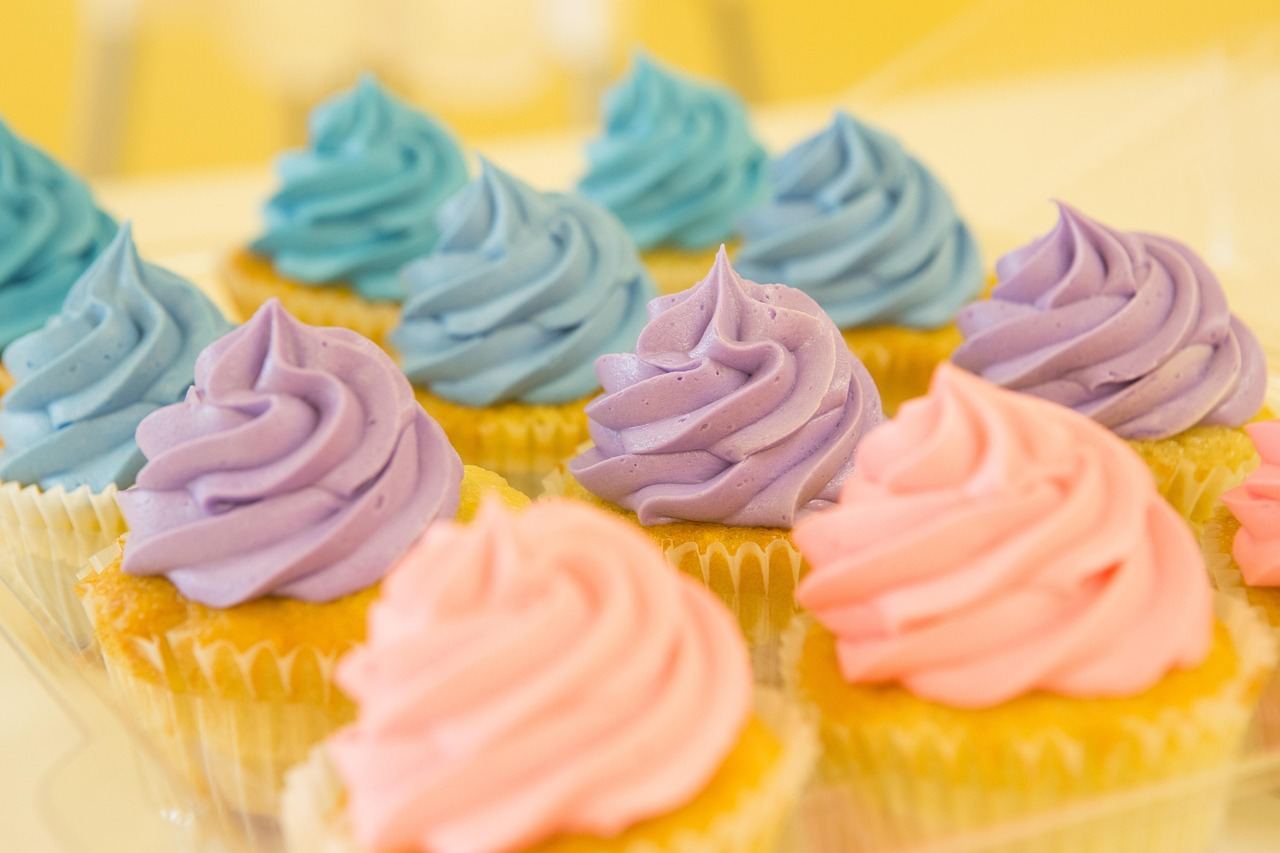
Treat the ratios as a guide, not a law. The Clove Coterie’s version uses 1 cup (225g) of butter with 4 cups of powdered sugar and 2-3 tablespoons of liquid, which is a different balance from the small batch above.
Flavor, color and white buttercream variations
Because the milk is a placeholder for other liquids, the base recipe adapts to almost any cake. These swaps come from Curly Girl Kitchen:
- Fruit or syrup flavors: concentrated syrups and fruit reductions take the place of the milk, though you may still need a little milk. Jam may mean extra powdered sugar to keep the frosting thick.
- Chocolate or nuts: fold chopped pieces in with a spatula after whipping.
- Cream cheese: it is softer than butter, so it takes more powdered sugar to reach the right consistency.
- Whiter frosting: substitute half the butter with shortening. This mix is also very stable for a cake that will sit out in warmer weather.
- Salt: about 1/4 teaspoon of coarse Kosher salt for a 3x batch balances the sweetness, especially with nuts as in a butter pecan buttercream.
Skip whole fruit and anything watery. Water dissolves the sugar and turns the frosting too liquidy.
Why American buttercream crusts
American buttercream is a crusting buttercream. According to Curly Girl Kitchen, the surface dries in about 30 minutes to an hour while the inside stays soft, and chilling the cake speeds this up.
Timing matters for decoration. Add sprinkles or sugar pearls before the frosting crusts, and do any piping or “painting” with more buttercream after it crusts. A crumb coat benefits from the crust too, since it needs to dry and chill before the final coat.
Frosting is only as good as the cake under it, so if your layers dome or collapse, read about why does my cake sink in the middle before you start.
American, Swiss or Italian: which buttercream should you choose?
The Clove Coterie lists 7 major types of buttercream: American, Swiss, Italian, Russian, Ermine, French and German. The first three are the ones most home bakers meet.
| Type | Made from | Character |
|---|---|---|
| American | Butter and powdered sugar | Sweetest and simplest; crusts; not suitable for high temperatures |
| Swiss meringue | Egg whites, granulated sugar and butter | Does not crust; stable at room temperature and refrigerated |
| Italian meringue | Whipped egg whites, hot sugar syrup and butter | Most difficult; most stable and least sweet |
Italian meringue buttercream needs a candy thermometer because the sugar syrup is poured in at 240 F, according to the same source. That author’s advice to beginners is to master American buttercream before any other.
Storing and fixing your buttercream
You can make frosting ahead. The Clove Coterie says to refrigerate it for up to 5 days, then bring it back to room temperature and re-beat it before decorating. Leftovers also freeze well, per Curly Girl Kitchen.
Use this quick guide when the texture is off:
- Too soft: add powdered sugar a tablespoon at a time until it thickens.
- Too stiff: add a little milk or cream.
- Kitchen is very warm and the butter is very soft: you may not need the milk at all.
If you would rather bake something that needs no frosting, here is how to make cheesecake without cracks.
Frequently asked questions
Do I need meringue powder?
Show answer
No. Curly Girl Kitchen lists it as optional, though it adds stability.
Why is my buttercream not pure white?
Show answer
All-butter buttercream is always off-white, even after whipping. Replacing half the butter with shortening gives a whiter result.
How far ahead can I make buttercream?
Show answer
You can refrigerate it for up to 5 days, according to The Clove Coterie. Let it come to room temperature and re-beat it before using.
Is American buttercream good in hot weather?
Show answer
It is not suitable for high temperatures, per The Clove Coterie. Using half butter and half shortening gives a more stable frosting for warmer weather.