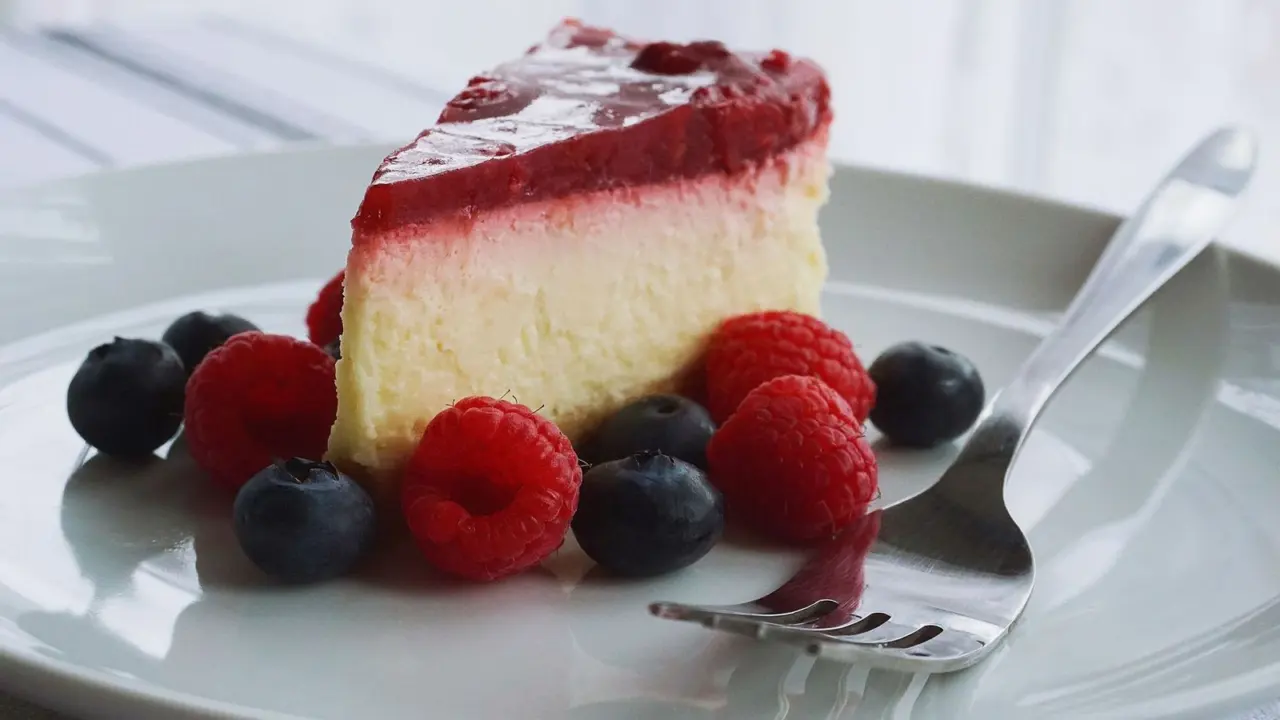
Worried your cheesecake will split down the middle? Here’s how to make cheesecake without cracks: pull it while the centre still jiggles, bake it with steam, and cool it slowly in the oven.
This guide is part of a collection of easy cake and dessert recipes for home bakers.
| Item | Value |
|---|---|
| Oven temperature for the filling | 350°F |
| Bake time | 45-55 minutes |
| Water in the separate tray | 1 inch |
| Cooling in the switched-off oven | At least 1 hour |
| Fridge chill | At least 4 hours or overnight |
| Keeps | Up to a week |
These figures come from the Frosting & Fettuccine cheesecake tips post as of its May 27, 2026 update. The overbaking point comes from the King Arthur Baking trial dated August 5, 2024. Figures can change, so check the source before you rely on them.
Why does cheesecake crack?
The biggest culprit is overbaking. King Arthur Baking’s baking trial calls it one of the biggest causes of cracking and says it will almost certainly make the cake crack (King Arthur Baking, August 2024).
That trial tested several ways of preventing overbaking on a NY cheesecake recipe. The plainest method, baking it like any other cake, needs an accurately calibrated oven and a very watchful eye. The source calls it tricky, because too long in the oven and the cake will crack.
A second cause is a sudden temperature drop. According to the Frosting & Fettuccine tips, a cheesecake taken out of the oven right after it finishes will most certainly crack because of that drop in temperature (Frosting & Fettuccine).
King Arthur Baking notes that there are a number of reasons a cheesecake cracks, either while baking or afterward. That is why the fixes below target both stages: the jiggle test and the water tray protect the bake, while the slow cool-down protects the cake once it leaves the heat.
So a smooth top comes down to a handful of habits:
- Start with room-temperature ingredients.
- Add a little flour to the batter.
- Bake with steam in the oven.
- Stop baking while the middle still jiggles.
- Cool the cake slowly before it goes into the fridge.
Start with room-temperature ingredients and a little flour
For a creamy batter, the tips say you need room-temperature ingredients. If you forgot to take everything out of the fridge, fill a bowl with lukewarm water and set the cold ingredients in it to help them along (Frosting & Fettuccine).
Some recipes also add a little flour. The reason given is that it firms up the batter a little and helps with crack prevention.
The recipe attached to those tips uses this filling. It is a useful reference for how much of each thing goes in:
- 4 packages of cream cheese, 8 oz each, at room temperature
- 1 cup granulated sugar
- 1 cup sour cream
- 4 large eggs
- 1/2 cup half and half
- 2 teaspoons vanilla extract
- A little all-purpose flour
When you mix, add the eggs one at a time, mixing for a few seconds between additions. Then add the flour slowly before bringing the mixer up to medium speed.
Bake with steam and stop at the jiggle
The same tips argue for a water bath, since the steam rising from the water helps keep the cheesecake extra smooth and creamy. The author’s answer to whether you need one is a plain yes.
Wrapping the springform pan in foil and setting it in a tray of water is the usual approach. The tips offer an easier version that keeps water away from the cake.
- Pour the batter into the springform pan and set the pan on a sheet tray.
- Put a second sheet tray on the lower rack of the oven and fill it with 1 inch of water.
- Place the cheesecake on the upper rack, above the water.
This setup means there is no chance of water seeping into the springform pan. Most of the water has also evaporated by the time you take the cheesecake out, so there is less to spill.
In that recipe the filling bakes at 350°F for 45-55 minutes. The cheesecake is done when the edges start to brown and break away from the sides of the pan.
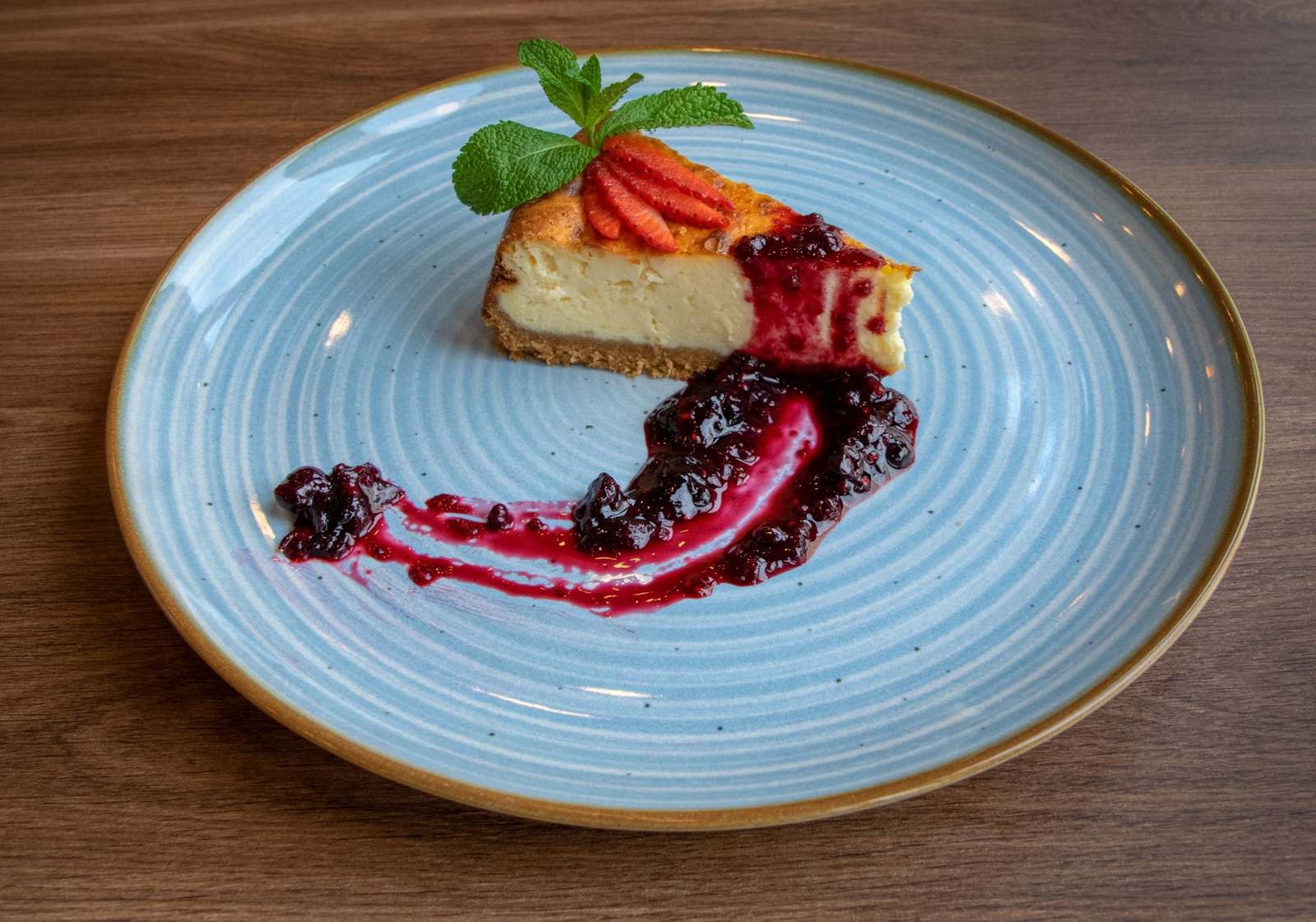
The centre should still be wobbly. Most cakes need to be set in the middle before they are done, but cheesecake is the opposite: if it is set in the middle it is over-baked and will likely crack. The jiggle firms up in the fridge.
Cool slowly, then chill
Cooling is where many smooth tops are lost. When the cheesecake is done, turn the oven off and leave the oven door slightly open. Do not take the cheesecake out.
Let it sit like that for at least an hour, then move it to the counter to keep cooling. After that it goes into the fridge.
The tips say to chill it for at least 4 hours or overnight. Cut it before it is completely chilled and you will have an ooey gooey mess.
Cracks can also happen at the very end, when you unlock the pan. Run a knife or an offset spatula along the edge of the pan to loosen the cake first.
While the cheesecake chills, you could line up a buttercream frosting recipe for your next cake. Chocolate fans can read up on how to make fudgy brownies next.
A step-by-step routine for a smooth top
- Take the cream cheese and other cold ingredients out ahead of time, or warm them in a bowl of lukewarm water.
- Mix the batter, adding the eggs one at a time and the flour slowly.
- Pour it into the pan, set the pan on a sheet tray, and put a second tray with 1 inch of water on the lower rack.
- Bake at 350°F for 45-55 minutes, until the edges are set and the middle still jiggles.
- Turn the oven off, crack the door, and leave the cheesecake inside for at least an hour.
- Move it to the counter, then chill it in the fridge for at least 4 hours or overnight.
If you only change one thing, watch the jiggle. Overbaking is the most direct cause of a crack in the sources, and the wobble is your cue to stop.
Frequently asked questions
Do I need a water bath for cheesecake?
Show answer
The Frosting & Fettuccine author says yes, because the steam helps the cheesecake turn out extra smooth and creamy. Her easier method uses a separate tray of water on the lower rack instead of a pan around the cake.
How do I know when a cheesecake is done?
Show answer
Look for set edges with a little jiggle left in the middle. If the middle is fully set, the cheesecake is over-baked and will likely crack.
What if my ingredients are still cold?
Show answer
Fill a bowl with lukewarm water and place the cold ingredients in it to help them warm up. This is the tip’s fix for forgetting to take everything out of the fridge in time.
How long does cheesecake keep?
Show answer
The recipe notes say it will be good for up to a week. Check the source recipe for storage details before you rely on that.