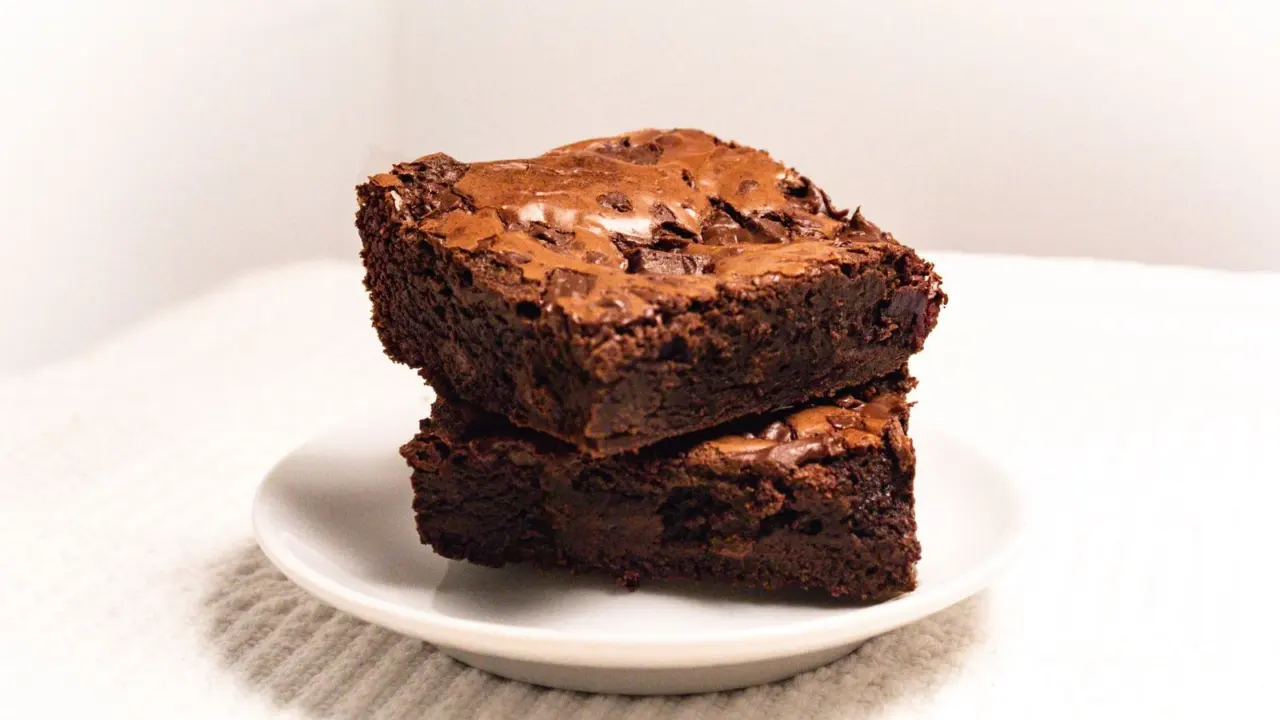
Worried your brownies turn out cakey? Here is how to make fudgy brownies: melt the butter, keep flour low against sugar and fat, and pull the pan while the centre is still soft.
For more bakes like this, browse the easy cake and dessert recipes.
| Item | Value |
|---|---|
| Butter, melted | 113 g (1/2 cup) |
| Granulated sugar | 200 g (1 cup) |
| All-purpose flour | 65 g (1/2 cup) |
| Cocoa powder | 50 g (1/2 cup) |
| Oven temperature | 350°F (175°C) |
| Bake time | 25 minutes |
These figures come from one tested home recipe, published December 21, 2025. Amounts and times can change, so check the source before you rely on them.
What makes brownies fudgy rather than cakey?
The answer is mostly proportions. King Arthur Baking’s May 21, 2025 guide explains that most brownie recipes share one ingredient list, but slight variations in the amount and proportions of each can lead to brownies that are chewy, fudgy, cakey or gooey.
Three levers matter most for a fudgy result:
- Fat: more fat leads to richer brownies, and less fat promotes a drier crumb.
- Melted butter: when butter is in the recipe, it is often melted to encourage fudginess.
- Sugar: more sugar helps brownies retain moisture, which makes them softer.
Those points are from the same King Arthur Baking guide. Flour is the lever you want to keep small, because it is what pushes a batter toward cake.
The fudgy brownie ratio: fat and sugar over flour
The tested recipe behind the table uses a high fat-to-flour ratio to create a dense, fudgy interior. In weight terms it works out to roughly one part flour to three parts sugar, which is a very low flour share.
Here is the full ingredient list for an 8×8-inch pan, per that recipe:
- 113 g (1/2 cup) butter, melted
- 200 g (1 cup) granulated sugar
- 2 large eggs, at room temperature
- 15 ml (1 tbsp) vanilla extract
- 50 g (1/2 cup) unsweetened cocoa powder
- 65 g (1/2 cup) all-purpose flour
- 1.5 g (1/4 tsp) salt
- 90 g (1/2 cup) semi-sweet chocolate chips
One science-style guide goes further and says fudgy brownies contain no more than 0.75 parts flour per 1 part sugar by weight. Its testing methods are not published, so treat that as a rough ceiling rather than a law.
How to make fudgy brownies step by step
This method follows the same recipe and relies on melted butter and a thorough whisk of sugar and eggs instead of any baking powder.
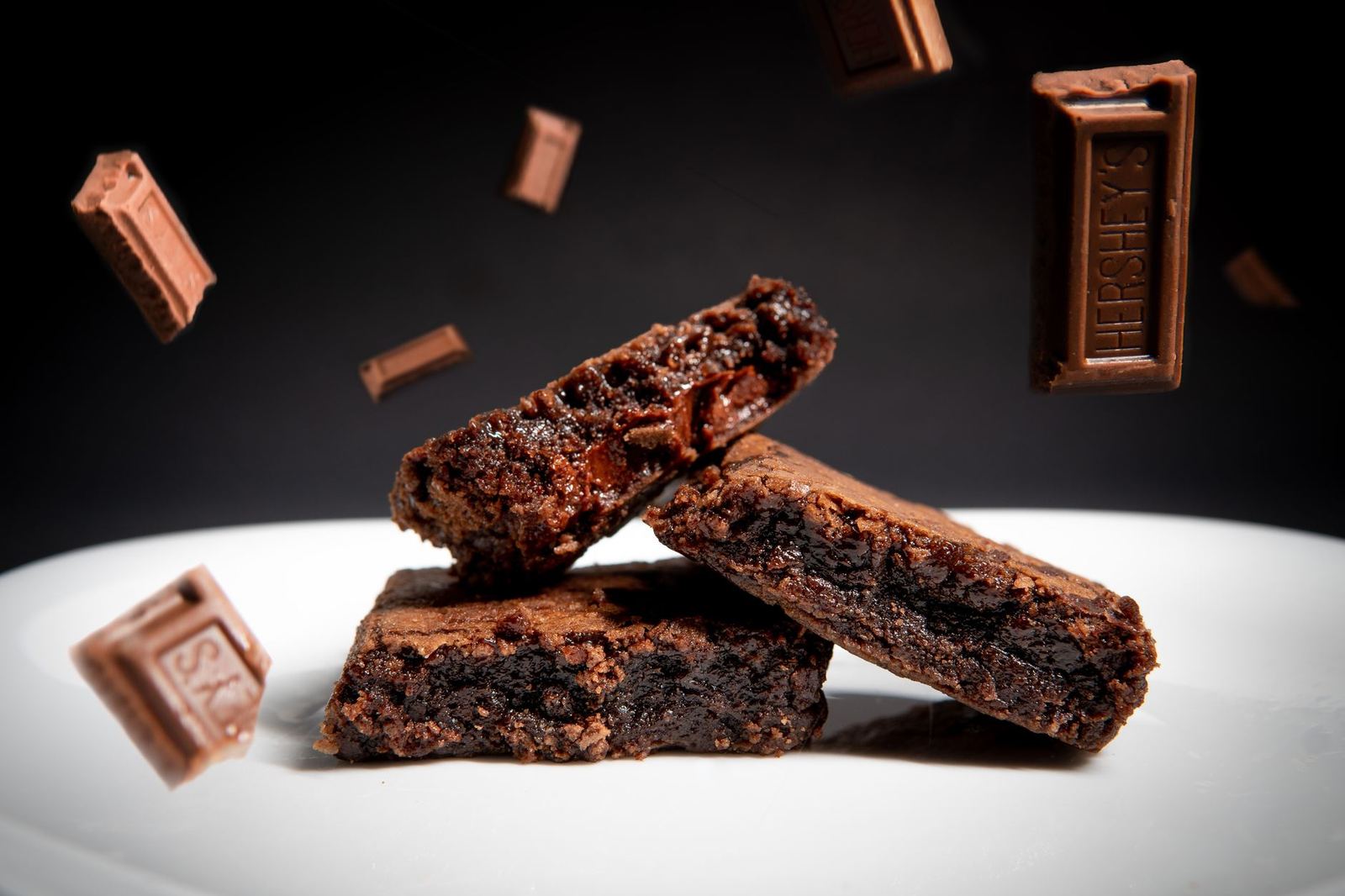
- Preheat the oven to 350°F (175°C) and line an 8×8-inch pan with parchment paper.
- Melt 113 g of butter in a microwave-safe bowl.
- Whisk 200 g of sugar into the butter for 2 minutes, until the mixture looks gritty and pale.
- Add the 2 eggs and the vanilla, then beat at high speed for 3 minutes, until the batter is thick, pale and ribbony.
- Sift in the cocoa, flour and salt, then fold gently until no white streaks remain and the batter is glossy.
- Stir in the chocolate chips and spread the batter into the prepared pan.
- Bake for 25 minutes, until the edges are set and a toothpick comes out with moist crumbs.
The recipe notes that room-temperature eggs prevent the butter from re-solidifying, so take them out of the fridge before you start.
Getting a shiny, crackly top
A fudgy brownie can still have a thin, papery crust. King Arthur Baking says partially melting the sugar makes it rise to the top of the batter and dry out while baking, which gives that crackly top.
That is why the method above whisks sugar into warm butter and then beats it with the eggs. Skipping that long whisk usually means a duller, matte surface.
Mistakes that turn fudgy brownies cakey
Most failed batches come down to a handful of habits:
- Baking too long. One guide says brownies come out of the oven at 190-195°F for fudginess, and that baking beyond 196°F pushes the batter toward a cakey structure.
- Overmixing after the flour goes in. Fold gently and stop when the white streaks disappear.
- Cold eggs. They can make melted butter set up again, so use room-temperature eggs.
- Adding extra flour. Measure by weight, because a scoop can easily pack in more than you intend.
The overmixing and cold-egg warnings also appear in that same guide, though it does not document its tests. Treat any exact temperature as a starting point and trust the toothpick test with moist crumbs too.
When a batch misses the mark, diagnose the texture before you change the recipe. If the crumb is dry, check the fat first: King Arthur Baking’s guide says more fat leads to richer brownies and less fat promotes a drier crumb. A recipe that skimps on butter will lean dry however carefully you bake it.
If the brownies are firm instead of soft, look at the sugar. The same King Arthur Baking guide says more sugar helps brownies retain moisture, making them softer, so trimming it to make a brownie less sweet can cost you that soft bite. Make any cut a small one and change only one thing per batch.
Once you have a likely culprit, work through these fixes in order, using the amounts from the tested recipe:
- Weigh the flour instead of scooping it, so the batter stays close to the recipe’s 65 g.
- Bring the eggs to room temperature so the melted butter stays fluid.
- Fold the flour in gently and stop as soon as no white streaks remain.
- Start checking with a toothpick a little before the 25-minute mark, and pull the pan while the crumbs on it are still moist.
The sources publish different methods and do not always agree on exact numbers, so your own oven is the most reliable test. Bake the recipe as written first, write down the time and the result, and then change a single variable on the next attempt. After two or three batches you will know exactly how your pan and oven treat a fudgy batter.
Cooling, slicing and what to bake next
Patience pays off at the end. The recipe lists a rest time of 1 hour for clean slicing, so let the pan cool before you cut.
Gentle cooling matters in other desserts too, so read how to make cheesecake without cracks next. If you want a very different dough to practise, try how to make pie crust for a flaky base.
Frequently asked questions
Should I use butter or oil for fudgy brownies?
Show answer
Either works. King Arthur Baking says oil makes brownies even more moist because it has a higher fat percentage than butter, while butter tastes better.
How do I know when fudgy brownies are done?
Show answer
Look for set edges and a toothpick that comes out with moist crumbs, not clean. The tested recipe bakes for 25 minutes at 350°F (175°C).
Why is my brownie top not crackly?
Show answer
The sugar probably did not partly melt before baking. Whisk it into warm butter and then beat it with the eggs, as the steps above do.
Do I need to let brownies rest before cutting?
Show answer
Yes. The recipe’s rest time is 1 hour, which helps you get clean slices.