Wondering how to make sourdough starter at home? You only need flour and water, a warm spot near 70°F, and 7 to 10 days of regular feeding until it’s bubbly.
If you are building your baking skills, the bread and pastry baking guide gathers the rest of the basics in one place.
| Item | Value |
|---|---|
| Time until ready to bake with | 7 to 10 days on average |
| Best growing temperature | Around 70°F |
| Flour to begin with | Whole grain, such as whole wheat or pumpernickel |
| Readiness test | A small spoonful floats in room-temperature water |
| Feeding at room temperature | Twice daily |
| Feeding in the refrigerator | Once weekly, only after the first 7 to 10 days |
These figures come from South Dakota State University Extension and King Arthur Baking’s sourdough guide. Figures can change, so check the source before you rely on them.
What you need to make sourdough starter
The ingredient list is short: flour and water. Beyond that, you need a container, a way to cover it loosely, and ideally a kitchen scale.
- Whole grain flour, such as whole wheat or pumpernickel, for the first mix.
- Water from your tap, unless it is so heavily treated that you can smell the chemicals.
- A clean container that you can cover loosely.
- A scale, preferably one that measures in grams.
King Arthur Baking likes to start with whole grain flour because the wild yeast that gives a starter its life is more likely to be found in whole grain flour than in all-purpose flour. That is a preference, not a rule. South Dakota State University Extension notes that whole-wheat, buckwheat, all-purpose and bread flour can all be used for starters, as can other flours that contain a starch component.
For water, room temperature is the target, 68°F to 70°F. If your house is chilly, use lukewarm water; if it is hot, use cool water. There is no need for bottled water when your tap water is fine.
A scale makes the whole process more accurate and much less messy. King Arthur Baking says measuring cups also work if you have to use them, so a missing scale should not stop you.
Step by step: flour, water and patience
Every starter recipe follows the same basic rhythm: mix, wait, feed, repeat. King Arthur Baking suggests setting aside about a week of minimal daily effort, while South Dakota State University Extension says 7 to 10 days is typical before a starter is ready for baking.
- Weigh your flour. On the first day, King Arthur Baking’s method combines 113g of pumpernickel or whole wheat flour with water, so follow the water amount in the recipe you choose.
- Stir until no dry flour remains, then move the mixture to a clean container.
- Cover it loosely so gases can escape and bugs and food particles stay out.
- Set it somewhere relatively warm, between 68°F and 70°F if you can manage it.
- Feed it with fresh flour and water on the schedule your recipe gives, and watch for bubbles.
Amounts differ between recipes. King Arthur Baking updated its starter recipe in April 2026 so that it now makes a smaller amount in response to home bakers’ feedback, which means less to feed and less to throw away. Sourdough baking is as much art as science, so a method that has worked for you before is still a good method.
The starter itself is a living mix of microorganisms. Bacteria arrive with the flour, water and container, and the starter makes its own yeast as it works through the flour. Every kitchen ends up with a slightly different starter.
Keeping your starter warm and fed
Temperature is the setting you can control most easily. South Dakota State University Extension says starters grow best around 70°F, a comfortable room temperature. A cooler spot slows growth and fermentation, so a cold kitchen simply means a longer wait.
Heat causes a different problem. In higher temperatures, growth and fermentation may happen too quickly and can even stop, which can lead to a starter going bad. A shelf away from the oven and out of direct sun is a safer choice than the top of the refrigerator or a sunny windowsill.
Feeding is what keeps the microorganisms alive and growing. At room temperature, a starter needs fresh flour twice daily. Follow your recipe’s water measurements, since water is what the microorganisms need alongside the flour.
Keep the lid loose rather than sealed. A loose cover helps prevent mold and keeps unwanted particles or insects out of the container.
How do you know your starter is ready?
Look at the time, the texture and the float. A starter is typically ready after 7 to 10 days, but your kitchen’s temperature can speed that up or slow it down. The float test is the most direct check.
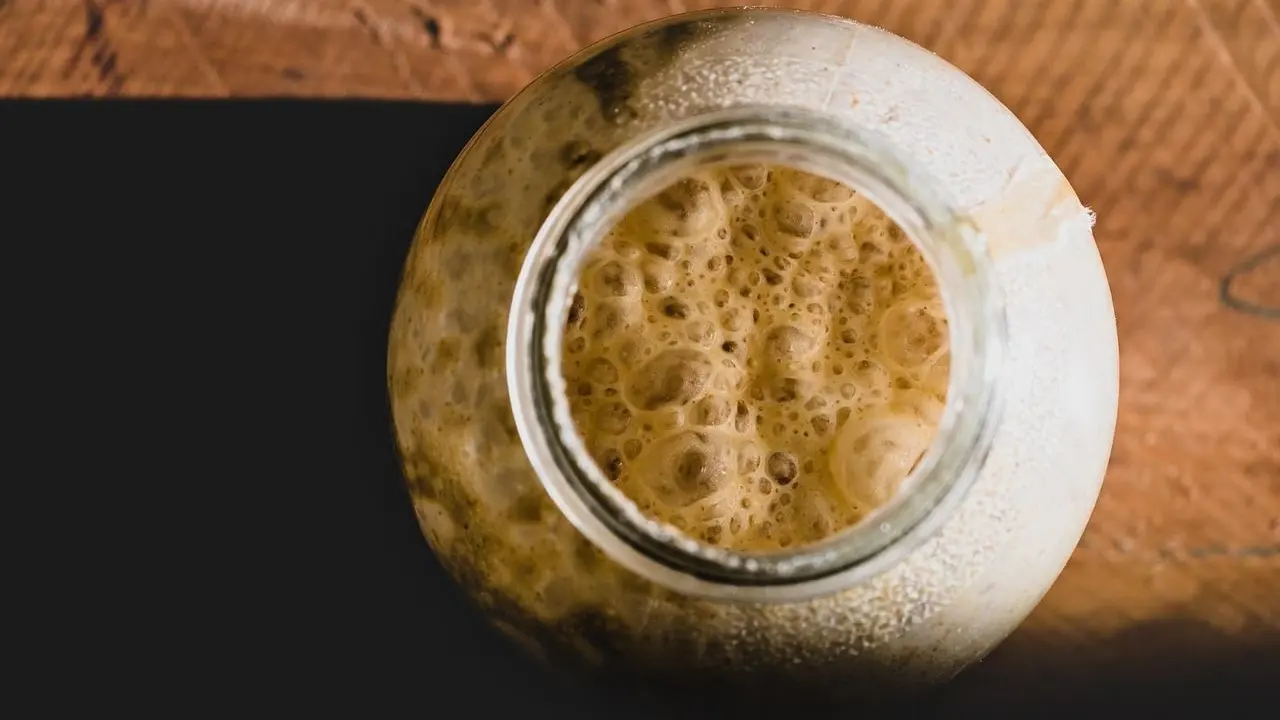
- It has an abundance of bubbles.
- It has a consistency similar to muffin batter.
- It pours from the container, but slowly.
- A small spoonful floats in room-temperature water.
South Dakota State University Extension describes a healthy, happy starter this way, and treats the floating spoonful as the sign that it is ready to use in baking. If the spoonful sinks, keep feeding and try again later.
Don’t be discouraged if your first attempt takes longer than expected. South Dakota State University Extension says creating your first starter may be a trial-and-error experiment. Once it is established and maintained, it can thrive for years.
When has a starter gone bad?
A starter has gone bad when there is mold growing within and on top of it. Other warning signs are a foul smell and discoloration, such as green, pink or orange spots. If you see any of these, discard the starter and begin again.
Basic food safety still applies. Kansas State University’s April 2022 guidance reminds bakers to use clean hands and equipment and quality ingredients. It also says flour is a raw food, so do not taste raw sourdough starter.
What to do once your starter is ready
Your established starter can now go into bread. While you wait for it to mature, or between bakes, you can practise with the no knead bread recipe to get comfortable with dough handling.
When a loaf comes out of the oven, guides on how to tell when bread is done will help you judge it before you slice in.
Storage depends on how often you bake. Starters kept at room temperature need feeding twice daily, while a starter kept in the refrigerator needs feeding once weekly. Do not move yours to the refrigerator until it has an established microbiome, after the first 7 to 10 days.
Frequently asked questions
How long does it take to make sourdough starter?
Show answer
On average, a starter takes 7 to 10 days of regular feedings to be ready for baking, according to South Dakota State University Extension. Cooler rooms slow it down, so be patient.
Do you have to use whole wheat flour?
Show answer
No. King Arthur Baking prefers whole grain flour because wild yeast is more likely to be found there. South Dakota State University Extension says all-purpose flour, bread flour and buckwheat flour can also be used.
Can you use tap water?
Show answer
Yes, according to King Arthur Baking, bottled water is not needed. Only a strong chemical smell from the faucet is a reason to look elsewhere, and room-temperature water at 68°F to 70°F gives the best results.
Should you put a new starter in the refrigerator?
Show answer
Not at first. South Dakota State University Extension says to wait until the starter has an established microbiome, after 7 to 10 days. After that, weekly feeding is enough for a refrigerated starter.
Is it safe to taste raw starter?
Show answer
No. Kansas State University’s April 2022 guidance says flour is a raw food and advises against tasting raw sourdough starter.