Worried your loaf is still raw inside? Here’s how to tell when bread is done: check for a golden crust, a hollow sound when you tap the bottom, and an internal temperature above 94C (200F).
This page is part of our bread and pastry baking guide, which collects the basics for home bakers.
| Item | Value |
|---|---|
| Internal temperature for most breads | Above 94C (200F) |
| Soft enriched rolls and loaves | About 92C (198F) |
| Dense rye or higher hydration whole wheat | Closer to 99C (210F) |
| Internal temperature where the crust will most likely burn | Above 100C (212F) |
| Weight lost by a finished loaf compared with raw dough | Roughly 15% lighter |
These figures come from ChainBaker and Food Republic. Recipes, ovens and sources differ and figures can change, so check the source before you rely on them.
Start with the internal temperature
If you are just starting out, a temperature probe is the tool that will not let you down. Another baking guide calls the temperature check virtually foolproof, because it does not matter what your oven temperature is, how big the loaf is or what type of bread it is, as Wide Open Country explains.
Push the probe in from one end so the tip sits about in the middle of the loaf. Then compare the reading with the target for your bread:
- Most breads are fully baked once the internal temperature reaches above 94C (200F), according to ChainBaker.
- Soft, fluffy enriched rolls and loaves can come out at about 92C (198F), per ChainBaker.
- Dense rye breads and higher hydration whole wheat breads should go closer to 99C (210F), says ChainBaker.
- Once the inside passes 100C (212F), the crust will most likely be burned, ChainBaker notes.
Living high above sea level? One experienced commenter on The Fresh Loaf suggests you deduct about 2 F for every 1000 ft above sea level from the usual target.
Some bakers worry that the probe damages the crumb. The same forum commenter says he has never found any crumb damage, even after inserting the probe several times, so a small hole is a fair price for a clear answer.
Read the crust colour
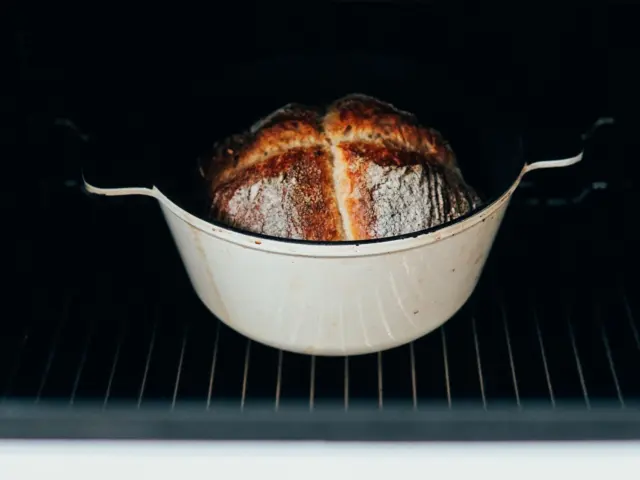
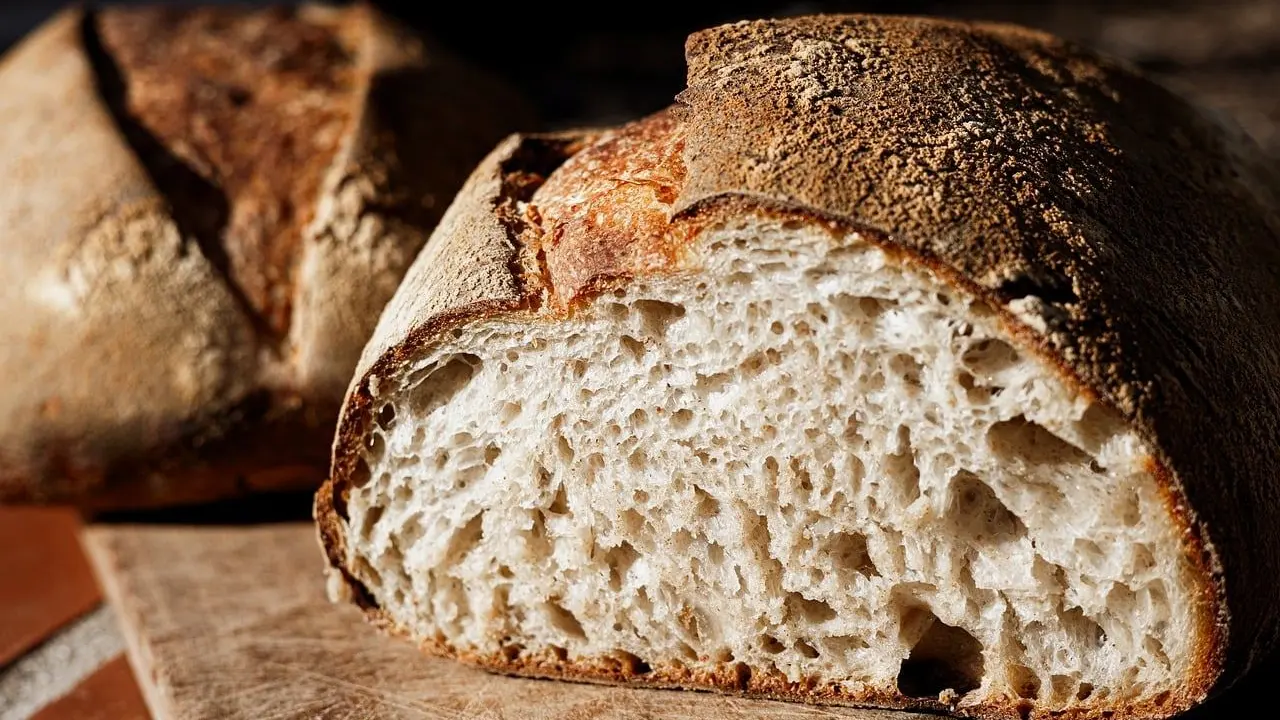
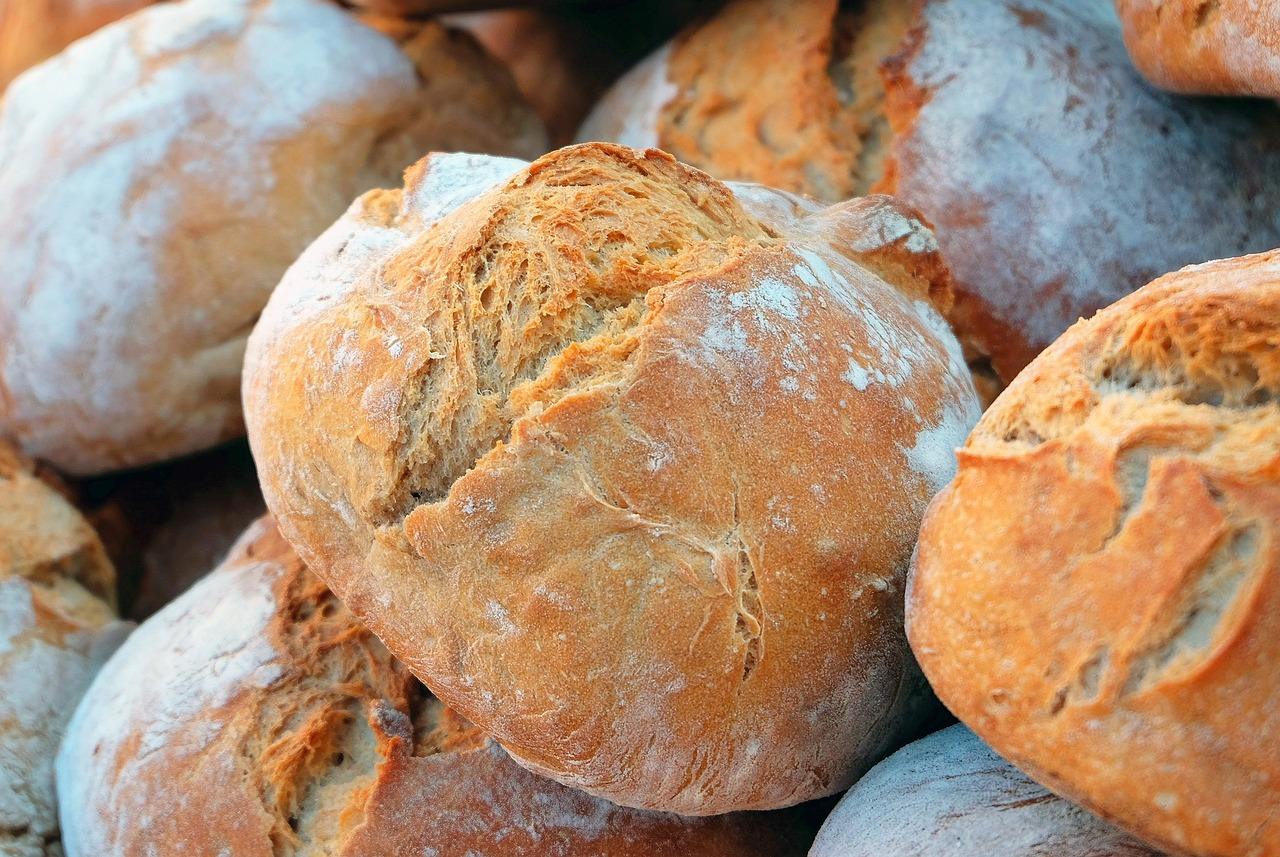
A golden brown crust is a strong sign of doneness, and it comes from the Maillard reaction, sometimes combined with caramelization. If the crust is pale, the inside is most likely raw.
The reverse can also trick you. A loaf baked at too high a temperature, or placed too close to the heating element, can turn dark before the middle has finished baking.
Sweet, enriched doughs and small rolls should be baked at lower temperatures and farther from the heat source, which is worth remembering when you learn how to make cinnamon rolls. Larger loaves and lean doughs can take much higher temperatures.
When a dark crust is fine
There is such a thing as baking bread dark, because the darker the crust, the more intense the flavour. Slow fermented breads made with preferments or sourdough leaven, especially with some whole grain flour, are great candidates.
If you bake with a leaven, our guide on how to make sourdough starter covers the starter itself. Keep in mind that you can get close to burnt without it actually being burnt, so it comes down to personal taste.
Egg-washed loaves look darker
Enriched breads like challah and brioche, which receive an egg wash, will get darker than other varieties. Unless it smells like it is burning, do not be alarmed by the deeper tone.
Check the spots without egg, such as between the braids, or take the loaf out of the pan and look at the bottom and sides. Those areas should be golden, not mahogany like the top. This is harder to judge on dark bread such as pumpernickel, so look for other clues there.
Lift the loaf and feel its weight
Baking drives water out of the dough, so a finished loaf feels lighter. A finished loaf will be roughly 15% lighter than the ball of raw dough it started as.
Lift the loaf before it goes into the oven and try to remember how heavy it feels. Lift it again when it comes out and compare. A fully baked loaf will feel quite a bit lighter, and since it will also have puffed up, the difference is usually easy to notice.
You can also touch the crust. For a loaf meant to be crusty, the outside should be dry and difficult to crack, and if you can easily pierce it, the bread needs more time.
How does a done loaf sound when you tap it?
Take the loaf out of its pan if it has one, turn it upside down and tap the bottom firmly. A done loaf should sound hollow, and you may almost hear a soft echo.
One way to do it is to hold the loaf in one hand and thump the base with the thumb of your other hand. It is a little like tapping a watermelon to find a ripe one.
Not every bread gives a clear answer. A dense rye bread will not be as audible, so use your probe for confirmation if you are unsure.
If the loaf does not sound hollow, put it back in the oven. Test it a few times over the next few minutes and look for other signs that it is done.
What if the loaf looks done but the middle is wet?
Sometimes a loaf smells, looks, feels and sounds finished, yet the centre is still undercooked when you slice it. In that case the oven temperature may be the issue, and a thermometer helps you check whether the oven is working properly.
Work through these steps next time:
- Follow the recipe’s suggested temperature and time. If you do, the bread will most likely be fully baked when the timer goes off, although ovens vary.
- Check the crust colour, weight and sound together, because no single sign is perfect.
- Confirm with the probe, especially for rye, which is quite hard to judge by feel.
- If the temperature says done but the crust is not golden yet, it is okay to put the bread back in the oven for a minute or two.
Over time, repeating these checks on every bake lets you piece the signs together and tell when bread is ready almost without thinking.
Frequently asked questions
Can I use a toothpick to test bread?
Show answer
It works for quick breads, but not reliably for yeast breads. Wide Open Country says the toothpick method suits muffins and similar bakes, not yeast breads, and Food Republic notes that moist breads such as banana bread can leave some crumbs on the skewer.
Will a thermometer ruin my loaf?
Show answer
A forum baker on The Fresh Loaf reports never finding crumb damage from a probe. Insert it through one end of the loaf, and make a new hole each time you check again.
Why does my crust look done but the inside is doughy?
Show answer
The crust may have darkened too fast because the oven is too hot or the loaf sits too close to the heating element. Check the internal temperature, and if the reading is low, put the loaf back in the oven.
Is a very dark crust a sign of burnt bread?
Show answer
Not necessarily. Darker crusts have a more intense flavour, and egg-washed breads such as brioche naturally go darker. A burnt smell, or an internal temperature above 100C (212F), is the warning sign.