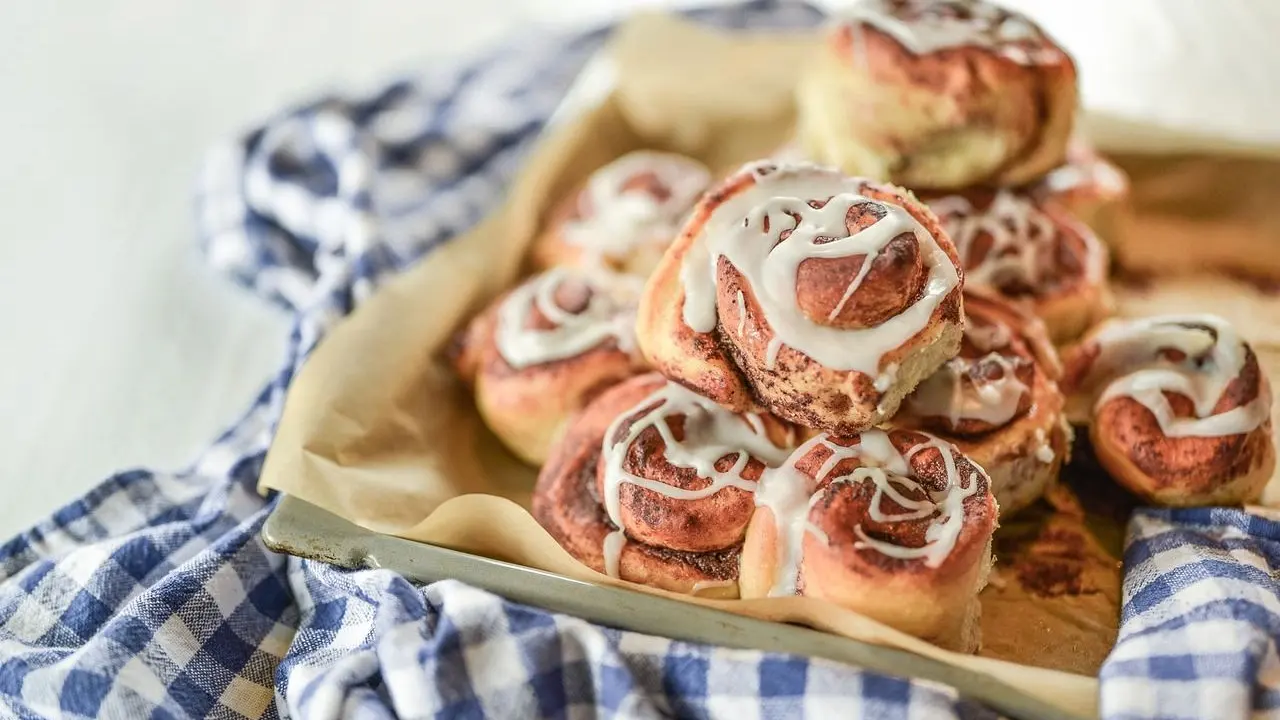
Worried your first yeast dough will turn out flat? Here is how to make cinnamon rolls that stay soft: warm the liquid gently, knead until smooth, roll tightly, and bake until the centers reach 190°F.
If yeast doughs are new to you, the bread and pastry baking guide covers the basics behind this recipe.
| Item | Value |
|---|---|
| Warm liquid for instant yeast | 120-130°F (49-54°C) |
| Yeast dies above | 138°F (59°C) |
| Dough rectangle | 16-inch by 12-inch |
| Rolls per batch | 12 rolls |
| Oven time | 350°F (180°C) for 22-28 minutes |
| Doneness temperature | 190°F (87°C) |
These figures come from Confessions of a Baking Queen and Jessica Gavin. Recipes and timings can change, so check the sources before you rely on them.
What you need for soft cinnamon rolls
Cinnamon rolls have three parts: a soft enriched yeast dough, a buttery cinnamon-sugar filling, and a frosting, as Fresh April Flours lays it out. Each part is simple on its own, so the method matters more than any special ingredient.
- Dough: flour, yeast, salt, sugar, butter, milk and an egg.
- Filling: brown sugar, granulated sugar, cinnamon and softened butter.
- Topping: cream cheese frosting or a simple vanilla glaze.
For the flour, Jessica Gavin’s recipe uses all-purpose for a tender dough. She notes that you can use bread flour, but the texture will not be as soft.
Yeast is the other big choice. Instant yeast mixes straight into the dry ingredients and needs a shorter rise, while active dry yeast needs to foam first and rises for longer.
How to make cinnamon rolls dough that rises
Temperature is where most first batches go wrong. Jessica Gavin heats the sugar, butter, water and milk to 120-130°F (49-54°C) for instant yeast, because yeast dies above 138°F (59°C). Keep an instant-read thermometer nearby and check before the liquid meets the yeast.
With active dry yeast, the same recipe hydrates it in 100-110°F water until foamy. Fresh April Flours aims for about 110°F (43°C) on an instant-read thermometer. If the yeast never foams, Confessions of a Baking Queen says it is dead and the rolls will not turn out, so start again with fresh yeast.
Once the dough comes together, a refresher on how to knead bread dough helps if you have never worked an enriched dough. A stand mixer with a dough hook needs about 5-6 minutes according to Confessions of a Baking Queen. By hand, Fresh April Flours suggests about 8-10 minutes.
Aim for a smooth ball that is not super sticky, which is the texture Confessions of a Baking Queen describes. With instant yeast, Jessica Gavin lets the dough rest for 10 minutes before rolling so it is easier to work.
Fill, roll and cut the rolls
Roll the dough into a 16-inch by 12-inch rectangle, the size given by Confessions of a Baking Queen. Jessica Gavin keeps the dough even at about ¼-inch thick. An even sheet gives you even swirls.
- Grease a 9-inch by 13-inch baking pan before your hands get messy with cinnamon sugar.
- Brush the dough with melted butter, then sprinkle on the brown sugar and cinnamon.
- Starting at a long edge, tuck the end in and roll the dough up tightly.
- Cut 12 pieces with a sharp serrated knife or unflavored dental floss.
- Set the rolls in the pan with a little space between them.
The cutting and pan details above follow Confessions of a Baking Queen. Dental floss slides through soft dough without squashing the spirals, which is why it is a popular trick.
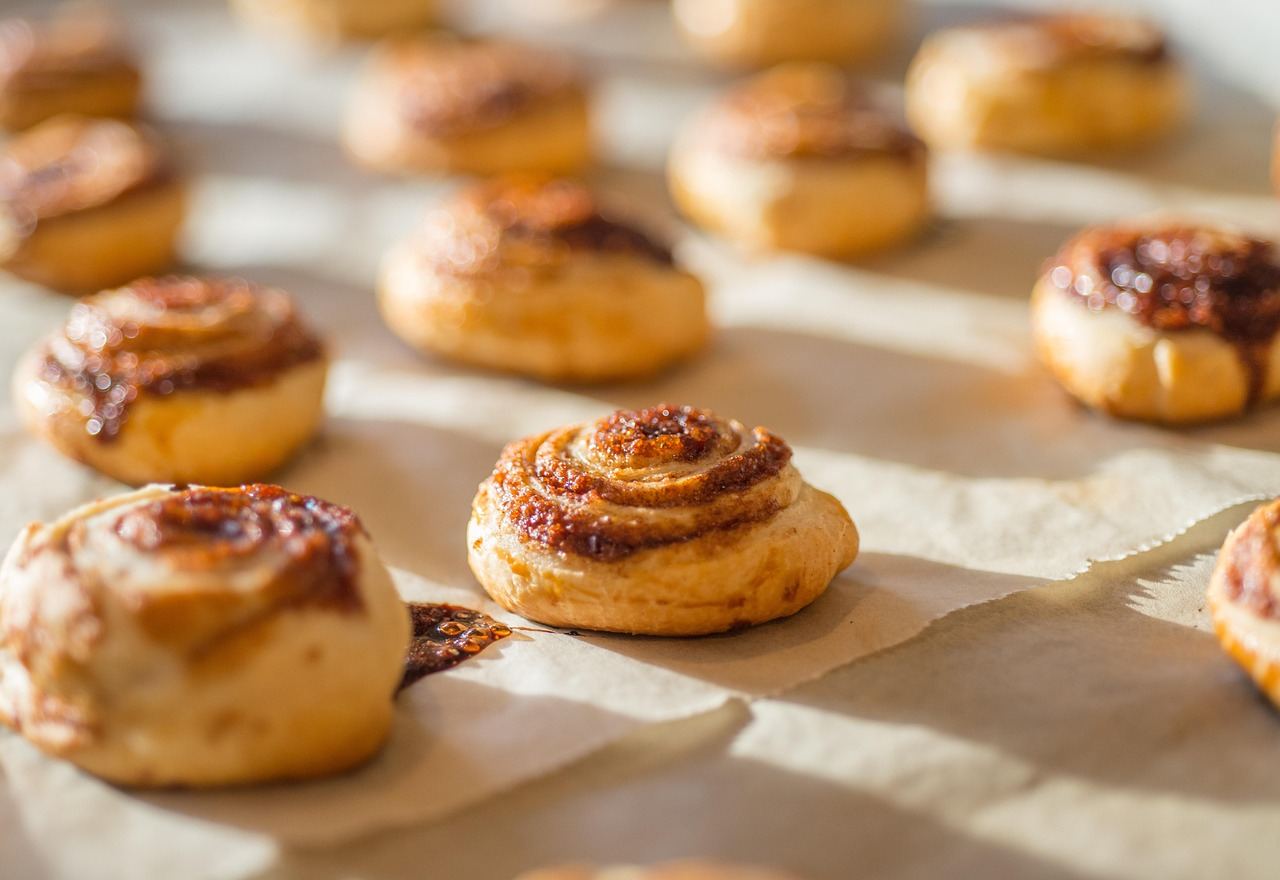
Rise, bake and check that they are done
Rising time depends on the yeast you chose. These are the timings the sources give:
- Instant yeast: one 30-minute rise after shaping, per Jessica Gavin.
- Active dry yeast: about 1 hour for the first rise and 30-60 minutes after shaping, per Jessica Gavin.
- Confessions of a Baking Queen: check the dough after an hour, then let shaped rolls rise 45 minutes to an hour, per that recipe.
For extra-soft centers, Confessions of a Baking Queen pours slightly warmed heavy cream over the risen rolls just before they go in the oven. The cream is warmed so the temperature difference does not shock the dough.
That recipe bakes at 350°F (180°C) for 22-28 minutes until lightly golden. It then checks that the center has reached 190°F (87°C) with a thermometer, as described by Confessions of a Baking Queen.
You can find more doneness cues in how to tell when bread is done.
Frosting, make-ahead and easy swaps
Spread a thick cream cheese frosting over the rolls while they are still warm, as Confessions of a Baking Queen does. For a lighter finish, Jessica Gavin whisks a glaze of powdered sugar, warmed whole milk, vanilla extract and lemon juice.
You can make the rolls ahead. Cover the shaped rolls with plastic wrap and refrigerate them overnight, then let them rise or thaw on the counter for about 45 minutes the next day, following Confessions of a Baking Queen. Fresh April Flours also notes its rolls have only one rise and can wait in the refrigerator until morning.
Some swaps from Jessica Gavin to try once the basic method feels comfortable:
- Dairy-free: coconut oil, margarine or shortening in place of butter.
- Extra fillings: chopped pecans or walnuts, apple pie filling, caramel sauce, Nutella or chocolate chips.
- Frosting: cream cheese frosting in place of the glaze.
Frequently asked questions
Can I use active dry yeast instead of instant?
Show answer
Yes. Jessica Gavin says to hydrate it in 100-110°F water until foamy, then allow a longer rise of about 1 hour first and 30-60 minutes after shaping.
Can I make cinnamon rolls the night before?
Show answer
Yes. Confessions of a Baking Queen covers the shaped rolls with plastic wrap and chills them overnight, then lets them rise on the counter for about 45 minutes before baking.
Why did my dough not rise?
Show answer
The yeast may have been too hot or already dead. Jessica Gavin warns that yeast dies above 138°F (59°C), and Confessions of a Baking Queen says yeast that does not foam is dead.
How do I cut neat rolls?
Show answer
Use a sharp serrated knife or unflavored dental floss to cut 12 pieces, as Confessions of a Baking Queen suggests.
Can I use bread flour?
Show answer
You can, but Jessica Gavin says the texture will not be as soft as with all-purpose flour.